Bali
Nusa Dua Property Investment: Bali's Institutional-Grade Hospitality Enclave
Nusa Dua is Bali's most master-planned, supply-controlled and brand-saturated sub-market. For investors prioritising stability, operator quality and exit liquidity over upside, it is the most defensible Bali entry point in 2026.
Why Nusa Dua specifically
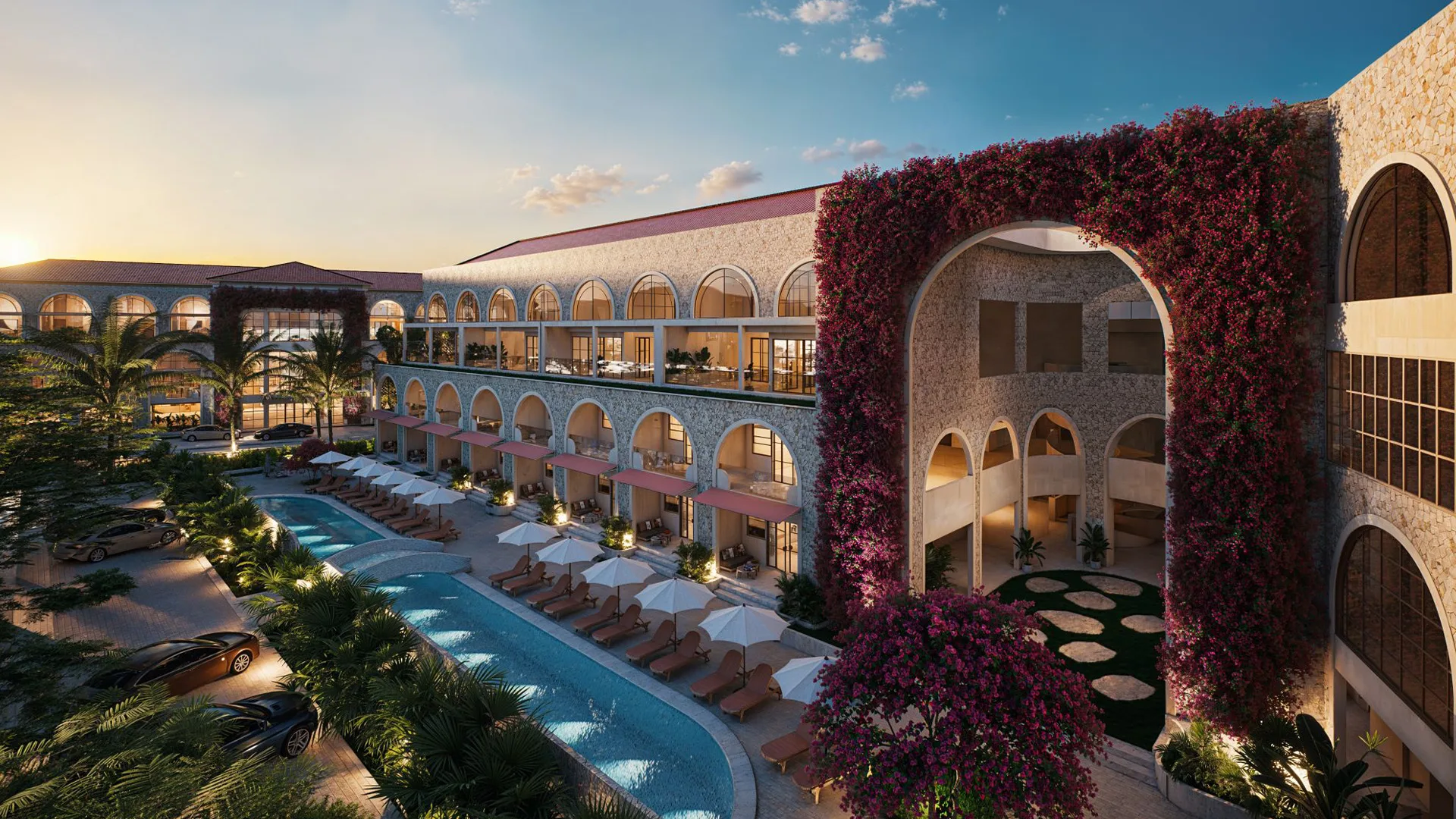
Nusa Dua sits inside the ITDC zone — a master-planned enclave operating under stricter zoning, infrastructure and brand-quality controls than the rest of Bali. The result: a dense cluster of 5★ international flags (Sofitel, St. Regis, Apurva Kempinski, Mulia, Conrad, The Westin, Grand Hyatt), a contained pipeline and the most consistent year-round occupancy on the island. Branded residences here trade on operator quality and infrastructure rather than view scarcity, which makes underwriting more predictable.
Who Bali property investment is for
- — International investors deploying $250K–$3M into a single asset, with no need for residency in Indonesia.
- — Buyers who want hospitality cash flow — not a holiday home that occasionally rents.
- — Investors who already understand emerging-market risk and are looking for diversification outside USD, EUR and AED markets.
- — Buyers who plan to hold 5–10 years and exit to either the next foreign cycle buyer or to a hospitality fund.
Asset types available to foreign buyers
Branded villas (managed pool)
2–4 bedroom standalone villas inside a managed estate with a hospitality operator. Net yields 8–14% on stabilised years, capital appreciation 6–10% p.a. in supply-constrained sub-markets.
Boutique resort residences
Branded-residence keys inside a 30–80-key boutique resort, typically with a guaranteed component for the first 1–3 years and a revenue share after that. Suited to investors who want simpler cash-flow visibility.
Off-plan and co-development
Earlier-stage entry at developer pricing in exchange for construction risk. Higher target IRR (18–25%), longer hold, larger ticket — only suitable for investors who understand land structuring and Indonesian permitting.
Legal & ownership structures — the part most sellers gloss over
Foreigners cannot own freehold (Hak Milik) land in Indonesia. The legitimate structures are: leasehold (Hak Sewa, typically 25–30 years renewable), right-to-use (Hak Pakai, via KITAS/KITAP residency), and PT PMA (foreign-owned Indonesian company holding Hak Guna Bangunan — right to build). For most international buyers entering Bali for the first time, well-drafted leasehold of 25+25 years is the cleanest path. CROWNHAVEN insists on independent Indonesian counsel acting for the buyer (not the developer's notary), full chain-of-title search, and an escrow structure for staged construction payments — non-negotiable.
Realistic return model
The 'guaranteed 20%' marketing language you see on Bali developer brochures is unsustainable past Year 3. CROWNHAVEN's underwriting on the projects we accept assumes:
- — ADR realism: 15–25% discount to operator pro-forma in Year 1, +5–8% p.a. thereafter.
- — Occupancy: ramp from ~50% in Year 1 to a stabilised 70–78% in Year 3.
- — OPEX: 30–38% of gross revenue including operator fees, channel commissions, F&B costs and reserves.
- — Stabilised net yield: 8–14% on freehold-equivalent (leasehold-adjusted) acquisition cost.
- — Capital appreciation: 5–9% p.a. in scarcity sub-markets, sub-zero in oversupplied corridors.
Main risks investors must price in
- — Currency: rental income flows in IDR; capital values largely in USD/AUD intent — natural FX mismatch.
- — Supply: Canggu villa supply has more than doubled since 2020. Pick sub-markets with structural scarcity.
- — Operator quality: a weak property manager can destroy 30–50% of theoretical yield.
- — Land-title litigation: legitimate in Bali. Independent legal due diligence is mandatory.
- — Regulatory: tourism levies, short-term-rental zoning and tax reform are all in motion — assume tightening, not loosening.
How CROWNHAVEN screens a Bali opportunity
- — Site-level scarcity check: walking distance to beach, view corridor protection, immediate neighbourhood pipeline.
- — Independent chain-of-title and zoning verification through Indonesian counsel.
- — Operator track record: minimum 24-month stabilised data on at least one comparable asset.
- — Stress-tested pro-forma: −20% ADR, −10pp occupancy, +5pp OPEX — net yield must still be positive.
- — Exit liquidity check: clear next-buyer profile in Year 5 / Year 7 / Year 10.
- — Construction and capital schedule reviewed against an independent QS.
FAQ
- Can foreigners legally own property in Bali?
- Foreigners cannot own Hak Milik freehold land. The legitimate routes are leasehold (Hak Sewa, 25–30 years renewable), right-to-use (Hak Pakai) tied to residency, or via a foreign-owned Indonesian company (PT PMA) holding Hak Guna Bangunan. Each has different cost, tax and exit implications — CROWNHAVEN walks every client through the trade-offs with independent Indonesian counsel.
- What net yield is realistic on a Bali villa in 2026?
- A well-located, well-managed branded villa in Canggu, Uluwatu or Nusa Dua should deliver 8–14% net of OPEX and operator fees at stabilisation, on the all-in acquisition cost. Anything materially higher is either a Year-1 guarantee that won't survive, or an unrealistic operator pro-forma.
- Is Bali oversupplied?
- Canggu specifically has experienced significant villa-pipeline growth and is increasingly two-tier — premium branded product still performs, generic 'investor villas' do not. Uluwatu and Nusa Dua remain materially more supply-constrained at the top end. Sub-market choice is now more important than market choice.
- Can I get residency by buying property in Bali?
- No automatic residency from purchase. Indonesia offers separate retirement and investor visa pathways with their own minimums and tax implications, evaluated independently from a property transaction.
- What's the typical hold period?
- Five to ten years is the standard window for stabilised hospitality assets, with an exit to either the next foreign cycle buyer or to a regional hospitality fund. Shorter holds compress IRR materially; longer holds need a clear refinancing plan for leasehold renewal.
Considering a Bali investment property?
Send us your target ticket and timing. We respond within one business day with a private shortlist matched to your profile — only assets we would underwrite for ourselves.
Request Private Shortlist